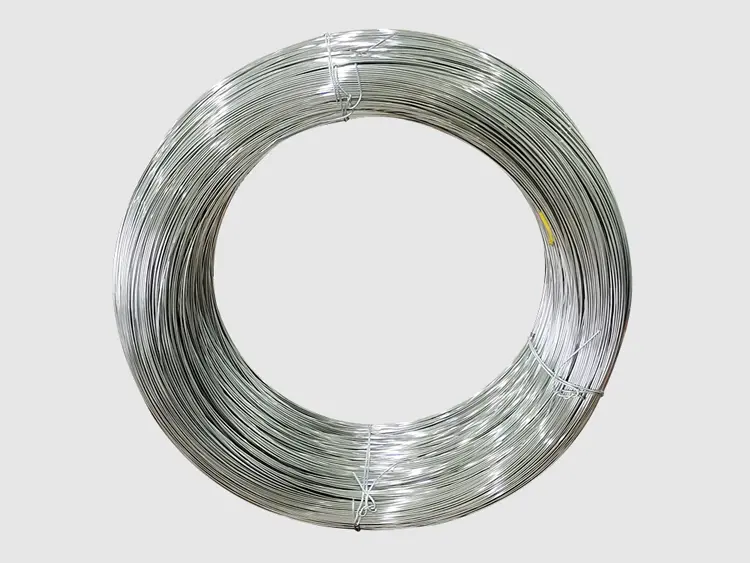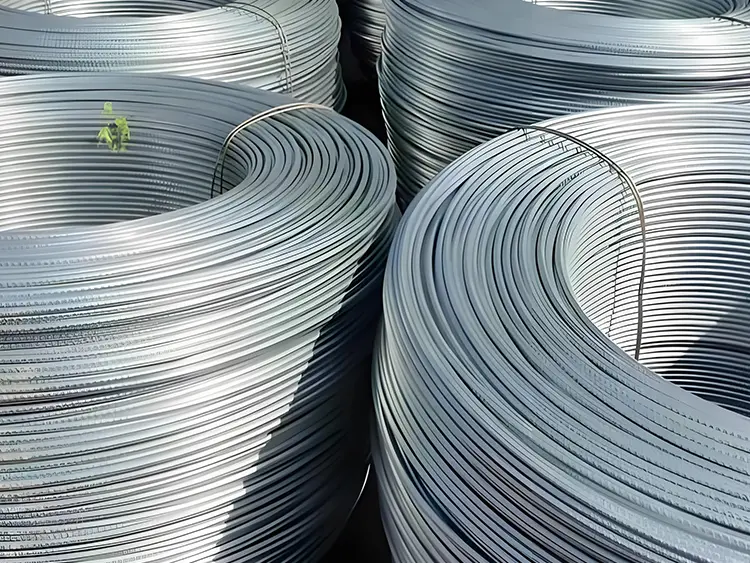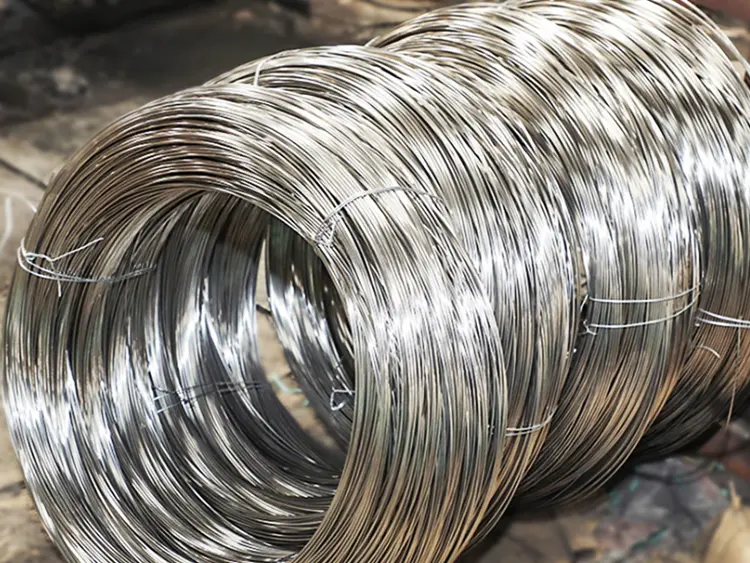
A nail plant earns its money at the drawing block. If the wire breaks there, or if the nail heads split on the header, it does not matter how cheap the rod was per ton. Most of those failures can be traced to things you can control before the rod is shipped: chemistry, rod diameter, surface scale and how the coils were cooled and packed. This guide is for drawing and nail plants buying SAE1008 or similar low-carbon rod from China.
What "SAE1008" actually guarantees
SAE1008 is a chemistry designation from SAE J403. It fixes the composition of the steel and nothing else. It does not set tensile strength, rod diameter tolerance, scale or coil weight. Those have to be written into your contract separately, or you will get whatever the mill normally rolls.
| Grade | C (%) | Mn (%) | P max (%) | S max (%) |
|---|---|---|---|---|
| SAE1006 (SAE J403) | 0.08 max | 0.45 max | 0.030 | 0.050 |
| SAE1008 (SAE J403) | 0.10 max | 0.30 – 0.50 | 0.030 | 0.050 |
| Q195 (GB/T 700) | 0.12 max | 0.50 max | 0.035 | 0.040 |
| Q235B (GB/T 700) | 0.20 max | 1.40 max | 0.045 | 0.045 |
Q195 also carries a mechanical requirement under GB/T 700: yield strength of at least 195 MPa and tensile strength of 315–430 MPa. SAE1008 has no such figures in J403, which is why two lots of "SAE1008" from different mills can draw quite differently.
Why low carbon matters on the drawing line
Every pass through a die work-hardens the wire. The lower the carbon, the more reduction the wire can take before it becomes too hard and brittle to draw further or to head without cracking. Drawing 6.5 mm rod down to 2.5 mm wire is an area reduction of about 85%, and a common nail then has its head formed cold from the same wire. Rod at the top of the carbon range, or with manganese drifting high, leaves less margin for both steps.
In practice:
- SAE1006 suits fine wire, high total reduction and plants without intermediate annealing.
- SAE1008 is the usual choice for common nails, roofing nails and general drawn wire.
- Q195 is widely used in China for nails and binding wire and is often offered as an alternative. Compare the actual carbon on the certificate rather than the grade name.
- Q235 is too strong for most nail wire. It is a construction grade and is better suited to mesh and structural uses where higher strength helps.
Choosing the rod diameter
Most nail plants buy 5.5 mm or 6.5 mm rod. The choice depends on the largest wire size you draw and on how many dies your machines have. Starting from a larger rod for thin wire means more passes, more die wear and more chance of breakage. Starting from too small a rod for thick wire leaves too little reduction to give the wire the strength the nail needs. Many plants stock both: 5.5 mm for thin and medium nails, 6.5 mm for heavier sizes. If your customers order by gauge, our BWG wire gauge chart converts gauge numbers to millimetres so you can plan the reduction.
Four things to inspect when the coils arrive
1. Scale
Hot-rolled rod leaves the mill with an oxide layer. Mechanical descaling (reverse bending and brushing) works best when the scale is loose and even. Heavy or patchy scale, or rust from storage in the rain, wears dies quickly and marks the wire. Bend a short sample by hand: good scale cracks off cleanly.
2. Diameter and ovality
Measure with a micrometer at several points along a few turns from different coils. Check the largest and smallest diameter at the same cross-section. An oval rod loads the first die unevenly. Agree the tolerance in the contract, for example by quoting the precision class of GB/T 14981.
3. Surface defects
Look for laps, seams, slivers and scratches. A lap that is pressed into the surface during rolling opens up in the drawing die and is a common cause of breaks. Note how many breaks happen per ton in the first coils you draw, and keep this record with the coil tag.
4. Coil condition
Coils should arrive tightly bound, without tangled or kinked turns. A kink becomes a break point on the pay-off. Check that the coil tags show heat number, grade and size, and that these match the mill certificate.
Reading the mill certificate for a nail order
Ask for an EN 10204 3.1 certificate showing the ladle analysis for each heat. For nail making, check these lines:
- Carbon: within the grade limit. Lower is usually easier to draw.
- Manganese: within the grade limit. High manganese raises hardness after drawing.
- Silicon: J403 does not set a silicon limit for SAE1008, so ask the mill to report it. Lower silicon is generally kinder to dies.
- Phosphorus and sulphur: within limits. High sulphur can cause splitting at the nail head.
- Tensile strength and elongation: if you asked for them in the contract, check they are reported for each heat.
Purchase order checklist
- Grade and standard: "SAE1008 per SAE J403", not just "SAE1008 or equivalent".
- Maximum carbon if you need it lower than the grade limit, and a request to report silicon.
- Rod diameter and tolerance class.
- Tensile strength range, if your plant needs it, stated as a contract requirement.
- Coil weight, coil inner and outer diameter, and binding (number of straps).
- Packing for the sea: covered, kept dry before loading, and no coils stored in open yards in the rain.
- Certificate type: EN 10204 3.1, one line per heat.
- Tagging: each coil tagged with heat number, grade and size.
Shipping notes
Wire rod is heavy and dense, so containers reach their weight limit long before they are full. Wire rod also moves as break-bulk on larger orders. Either way, rust is the main shipping risk. Condensation in a container on a long voyage can leave a thin rust film, which mostly comes off in descaling. Pitting from coils that stood wet for weeks before loading does not. If you ship in containers, ask for coils to be loaded dry. Then inspect the first coils at the door before you sign for the delivery.
Our steel wire rod in coils page lists the SAE1006/1008, Q195 and Q235 sizes we supply. If you prefer to buy drawn wire instead of drawing it yourself, see galvanized steel wire.
Frequently asked questions
Is SAE1008 the same as Q195 wire rod?
No, they are different standards with similar low-carbon chemistry; SAE1008 allows up to 0.10% carbon and Q195 up to 0.12%, so compare the actual values on the mill certificate.
Which wire rod size is best for nail making?
Most nail plants use 5.5 mm rod for thin and medium nails and 6.5 mm rod for heavier nails, depending on the wire sizes they draw.
Does SAE J403 specify the tensile strength of SAE1008 wire rod?
No, SAE J403 only covers chemical composition, so any tensile strength requirement must be written into the purchase contract.
Why does wire break during drawing?
Common causes are surface laps and seams, heavy or patchy scale, oval rod, kinked coils, and carbon or manganese at the high end of the grade range.
Need a quotation?
Send us the size, grade, quantity and destination port — we reply with a CFR/CIF price, usually within 24 hours.