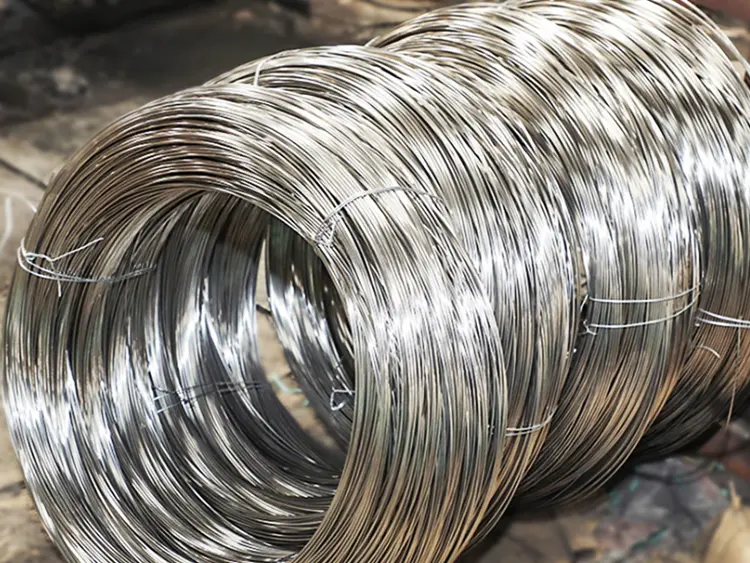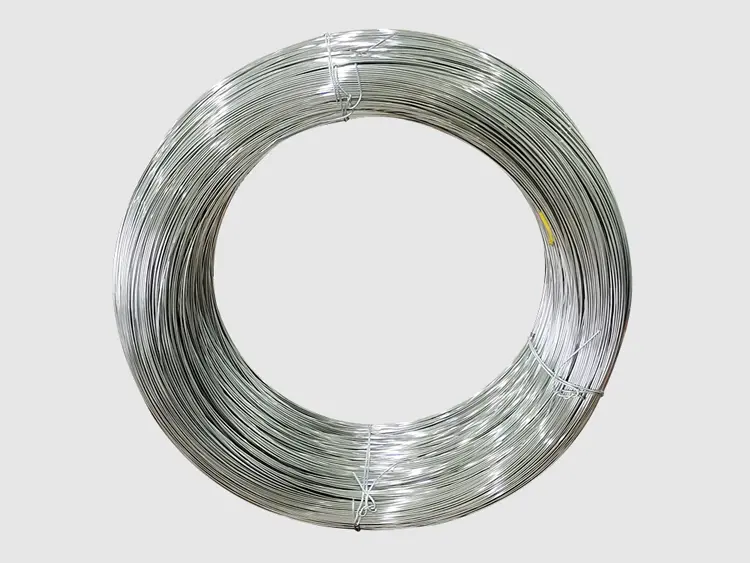
Galvanized wire is sold by gauge in most markets. Hardware shops in Nigeria, Kenya or Pakistan ask for "BWG 18 binding wire", and a mesh factory asks for "BWG 12". Factories in China, however, quote in millimetres, and buyers pay by the ton. This chart converts between the three, so you can check a quotation or work out how much wire a coil really holds.
BWG to millimetre conversion chart
| BWG | Diameter (mm) | Diameter (inch) | Weight (kg per km) | Metres per kg |
|---|---|---|---|---|
| 8 | 4.19 | 0.165 | 108.2 | 9.2 |
| 9 | 3.76 | 0.148 | 87.2 | 11.5 |
| 10 | 3.40 | 0.134 | 71.3 | 14.0 |
| 11 | 3.05 | 0.120 | 57.4 | 17.4 |
| 12 | 2.77 | 0.109 | 47.3 | 21.1 |
| 13 | 2.41 | 0.095 | 35.8 | 27.9 |
| 14 | 2.11 | 0.083 | 27.5 | 36.4 |
| 15 | 1.83 | 0.072 | 20.7 | 48.4 |
| 16 | 1.65 | 0.065 | 16.8 | 59.6 |
| 17 | 1.47 | 0.058 | 13.3 | 75.1 |
| 18 | 1.24 | 0.049 | 9.5 | 105.5 |
| 19 | 1.07 | 0.042 | 7.1 | 141.7 |
| 20 | 0.89 | 0.035 | 4.9 | 204.8 |
| 21 | 0.81 | 0.032 | 4.1 | 247.2 |
| 22 | 0.71 | 0.028 | 3.1 | 321.8 |
Weights are for bare steel at 7.85 g/cm³. Zinc adds less than 1%, so the figures hold for galvanized wire. Formula: kg per km = diameter² (mm) × 6.165.
BWG vs SWG: check which one the buyer means
BWG (Birmingham Wire Gauge) and SWG (British Standard Wire Gauge) are often confused. For most gauges they are close, but not identical. BWG 18 is 1.24 mm and SWG 18 is 1.22 mm; BWG 20 is 0.89 mm and SWG 20 is 0.91 mm. For binding wire the difference rarely matters. For mesh and spring wire it does, so write the diameter in millimetres on your purchase order as well as the gauge.
Which gauge for which job
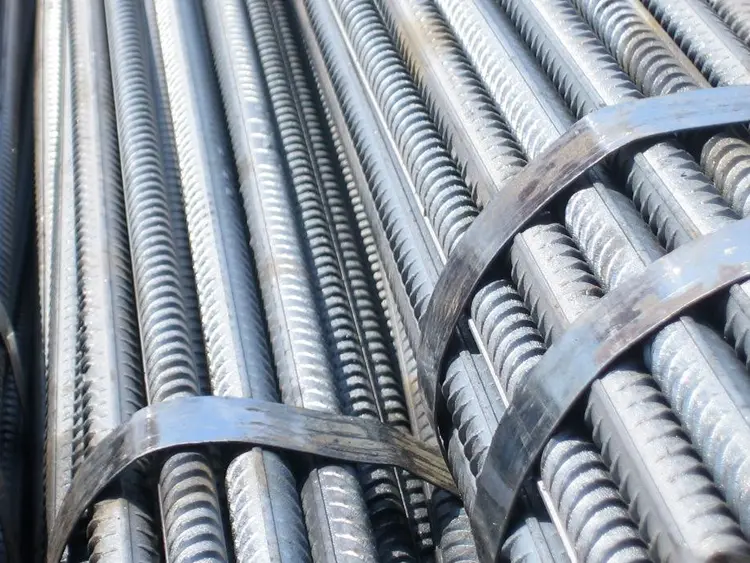
- Rebar tying: BWG 18 (1.24 mm) is the standard for hand tying; BWG 20–21 (0.8–0.9 mm) for tying tools and light mesh. Use soft annealed wire (350–500 MPa) so it twists without snapping.
- Chain-link fence: BWG 9–12 (2.8–3.8 mm) for the mesh, and heavier line wire for tensioning.
- Barbed wire: usually BWG 12–14 strands with BWG 14–16 barbs.
- Welded mesh: BWG 14–20 for light mesh and plaster lath; 3–5 mm for concrete mesh.
- Nails: made from 1.2–5 mm wire drawn from SAE1008 or Q195 wire rod, depending on nail length.
- Gabions: 2.2–3.0 mm heavy-coated hot-dip galvanized wire, often PVC coated too.
How much wire is in a coil?
Divide the coil weight by the kg per km figure. Some common examples:
- 25 kg coil of BWG 18: 25 ÷ 9.5 = about 2,640 m
- 50 kg coil of BWG 12: 50 ÷ 47.3 = about 1,060 m
- 1 kg roll of BWG 21: about 247 m
If a "25 kg" coil of BWG 18 measures much less than 2,600 m, either the coil is underweight or the wire is thicker than stated. Both are common complaints in retail markets, so it is worth checking on arrival.
Electro or hot-dip for your market?
For rebar tying, electro-galvanized wire is enough, because the wire ends up inside the concrete. For anything outdoors, choose hot-dip galvanized wire with at least 60 g/m² of zinc, or 200 g/m² and above on the coast. The details are on our galvanized steel wire page.
Frequently asked questions
What is BWG 18 in mm?
BWG 18 is 1.24 mm (0.049 inch). It is the most common gauge for tying rebar by hand.
How many metres of BWG 18 wire are in 1 kg?
About 105 metres, because BWG 18 weighs about 9.5 kg per kilometre.
Is a higher BWG number thicker or thinner?
Thinner. BWG 8 is 4.19 mm, while BWG 22 is only 0.71 mm.
What is the difference between BWG and SWG?
They are two different British gauge systems with slightly different diameters for the same number. For precise orders, always state the diameter in millimetres.
Need a quotation?
Send us the size, grade, quantity and destination port — we reply with a CFR/CIF price, usually within 24 hours.